
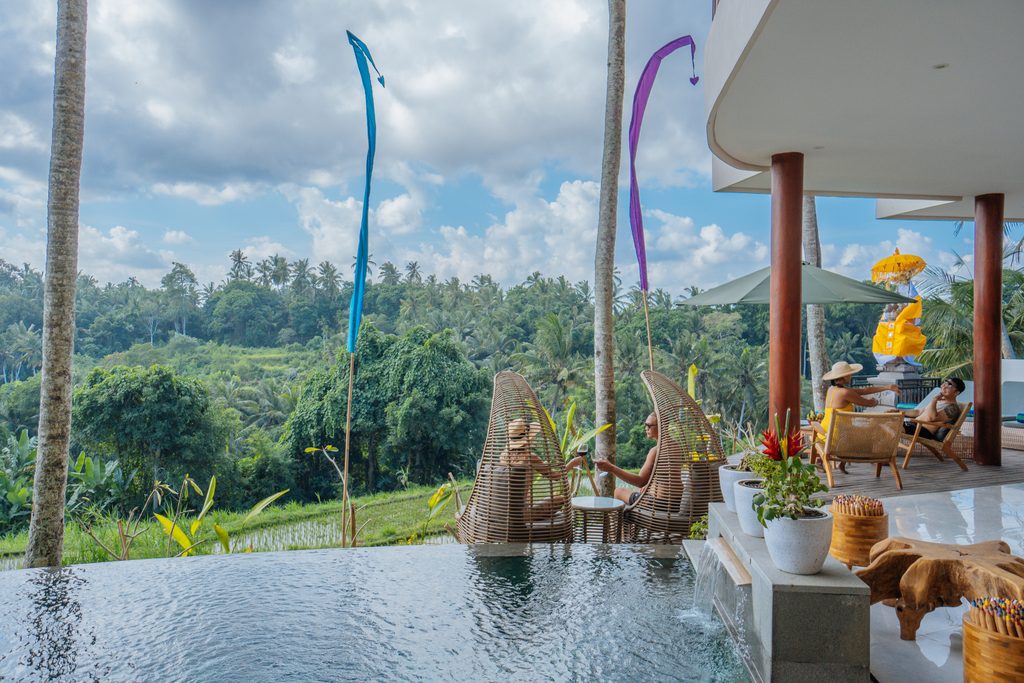
Guests relaxing overlooking lush tropical greenery at The Bodhi Leaf Wellness retreat in Bali
Most people choose a wellness retreat in Bali for yoga, meditation and massage. At The Bodhi Leaf Wellness, healing goes further: it continues at the breakfast table, with food grown and raised by the retreat’s own farm.
The Bodhi Leaf Wellness is an intimate sanctuary for individuals, couples and small groups. It’s the sister property of Floating Leaf Eco Retreat, and both are supplied by Bodhi’s Farm, a sustainable farm in rural Bali. Balinese founder Putu Maryam Rachman built all three to work as one connected ecosystem.
We talked with her about coming home to Bali, why food matters so much in healing, and her advice for Balinese women who want to build businesses rooted in their land and culture.
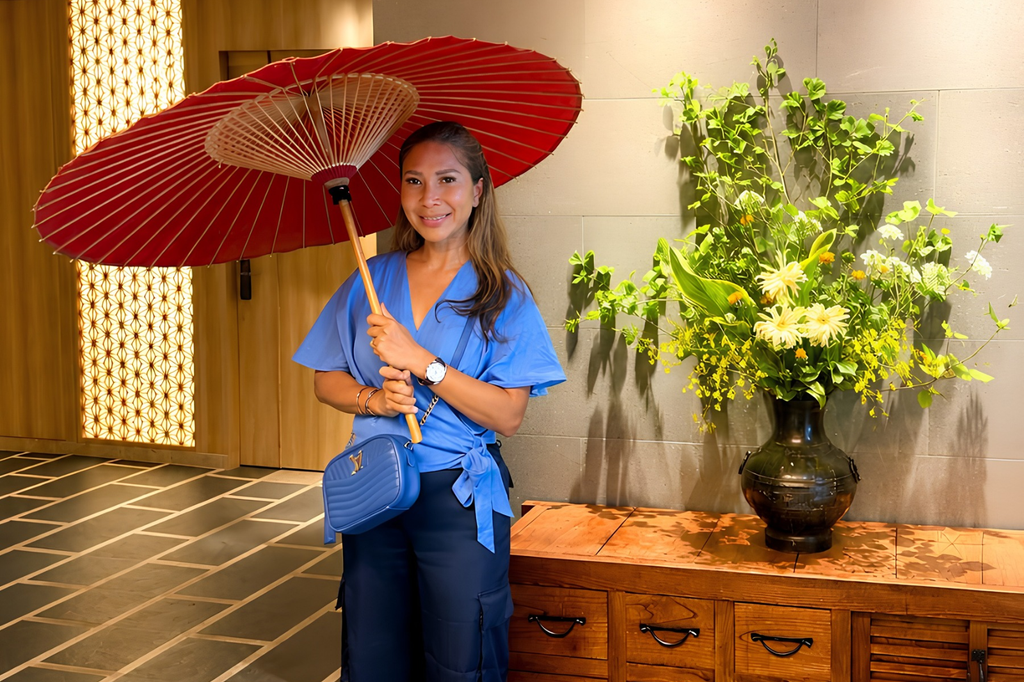
Putu Maryam Rachman, Floating Leaf’s founder, is a certified practitioner in Yoga for Healing Therapy, Chakras, and Sound Healing from the Indonesian Life Skill Academy
Coming Home to Bali: Where the Leaf Properties Began
Putu Maryam returned to Bali in 2013 to start building Floating Leaf Eco Retreat, a project that had been in planning for a couple of years. Before that, she spent seven years managing her own wellness spa in California.
She is also a trained yoga and sound healing practitioner. She holds Certified Diploma Levels I and II in Yoga for Healing Therapy, plus Advanced Yoga for Healing in Chakras and Sound Healing, from the Indonesian Life Skill Academy. She also completed a Sound Healing Therapy Course with Sound of Himalaya Retreat, part of Project Sound for Peace in Nepal.
“That experience taught me a great deal about running a business, understanding the wellness industry, and what international guests look for when seeking meaningful wellness experiences.”
Coming home was also personal. Being close to family meant support while raising children and building a business. Most of all, it was about reconnecting with her roots.
“I wanted to combine what I had learned abroad with the richness of Balinese culture, traditional healing wisdom and our beautiful natural environment.”
Floating Leaf grew out of that idea: modern wellness meeting authentic Balinese hospitality, without losing its connection to nature and local tradition. The Bodhi Leaf Wellness grew from that same vision.
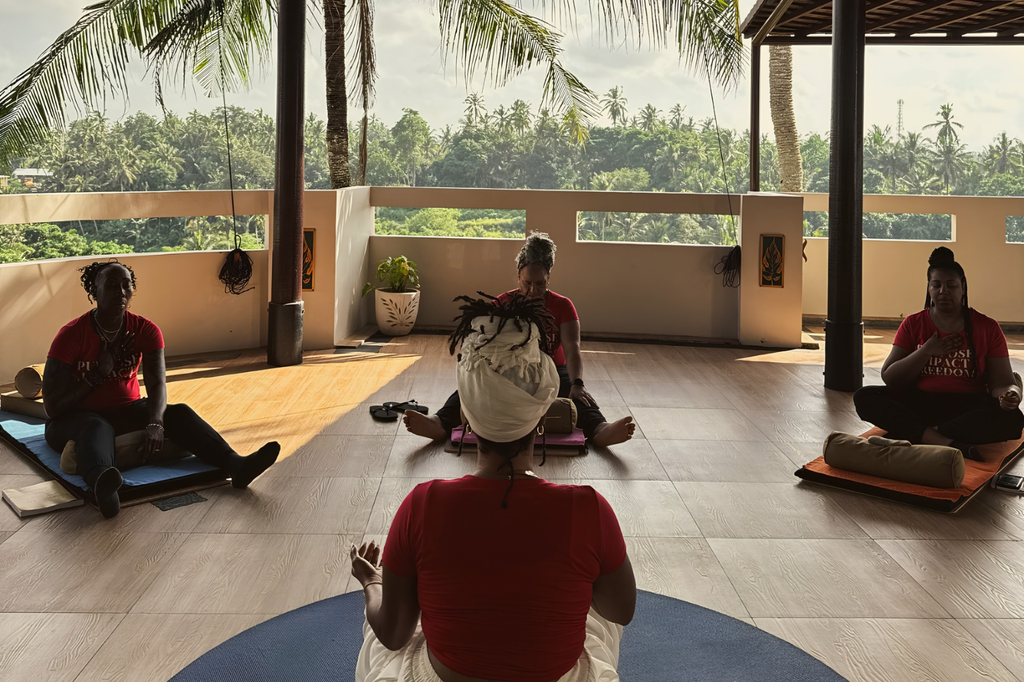
Group meditation and sound healing session at The Bodhi Leaf Wellness sanctuary in Bali
The Bodhi Leaf Wellness: Healing Beyond the Treatment Room
The Bodhi Leaf Wellness is a quieter, more personal sanctuary. It’s for guests looking for personal healing, emotional renewal and a deeper connection with themselves.
Putu Maryam doesn’t see herself as a healer or a guru. She believes each guest is their own healer, and sees her role as a bridge between their inner and outer worlds, using sound and vibration to help them relax into a deep, meditative state.
From the start, she didn’t want her retreats to be only about yoga, meditation, massage or healing treatments.
“Those experiences are important, but I believe true wellness also comes from what we nourish our bodies with every day.”
That’s why food is an essential part of the guest experience at The Bodhi Leaf Wellness and Floating Leaf. The kitchens cook with nourishing ingredients, including chicken from the retreats’ own farm, so the team knows exactly where the protein on every plate comes from.
Why Food Matters So Much in Healing
Many guests arrive exhausted, stressed or disconnected. Nourishing the body, she says, is one of the first steps toward helping them feel better.
“Healing is not only about what happens during a treatment. It is also about what happens at the breakfast table, what we eat throughout the day and the habits we take home with us.”
She wants guests to leave with more than a relaxing stay. She wants them to understand the story behind their food and how everything is connected.
From Retreat Kitchen to Farm: A Complete Circle
The connection between the retreats and the farm runs both ways. The retreats’ kitchens produce organic waste, and instead of throwing it away, the team separates what’s suitable and sends it to the farm.
She describes it as a complete circle:
- The retreats and their kitchens produce organic waste.
- Suitable organic waste becomes a resource for Black Soldier Fly larvae production.
- The larvae provide a natural protein source for the chickens.
- The chickens provide nutritious food for retreat guests.
- Other organic materials go back into the soil to support the growing environment.
“This is what sustainability should look like: not just reducing our impact, but creating something useful from the resources we already have.”
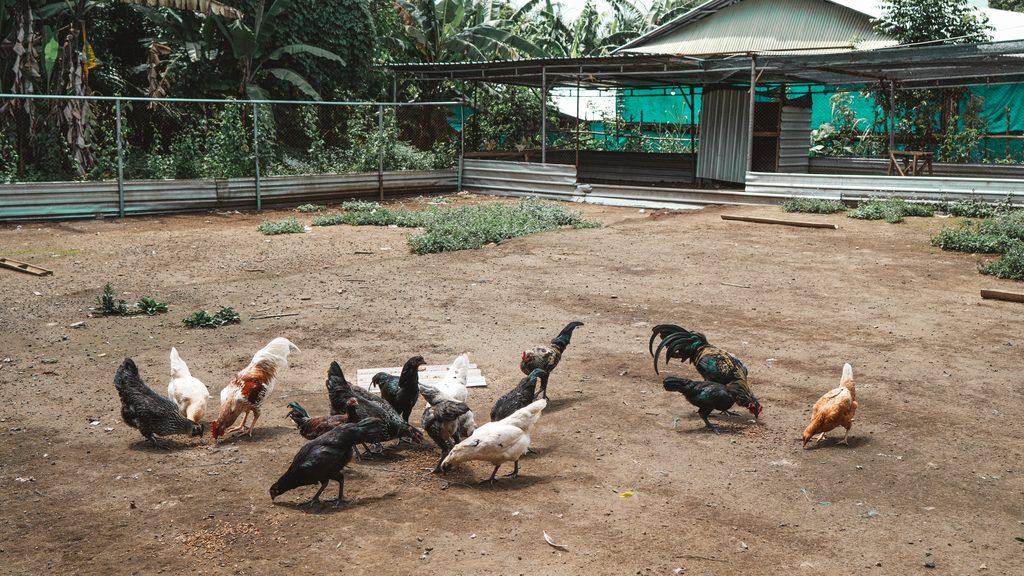
Naturally raised free-range chickens at Bodhi’s Farm in rural Bali
Bodhi’s Farm: Healthy Food Begins With Healthy Animals
Bodhi’s Farm raises its chickens naturally, without routine antibiotics or growth hormones. Instead, it uses probiotics, including beneficial bacteria such as Lactobacillus, plus traditional Indonesian herbs like ginger, turmeric and curcuma to support the birds’ gut health and natural immunity.
“For me, it comes down to one simple belief: healthy food begins with healthy animals.”
That choice has a price. Production costs are at least 20% higher than conventional chicken farming, because the farm puts feed quality, animal welfare, hygiene and the farm environment ahead of volume.
“I would rather build a business around the quality and integrity of our food than compromise our philosophy just to produce more cheaply.”
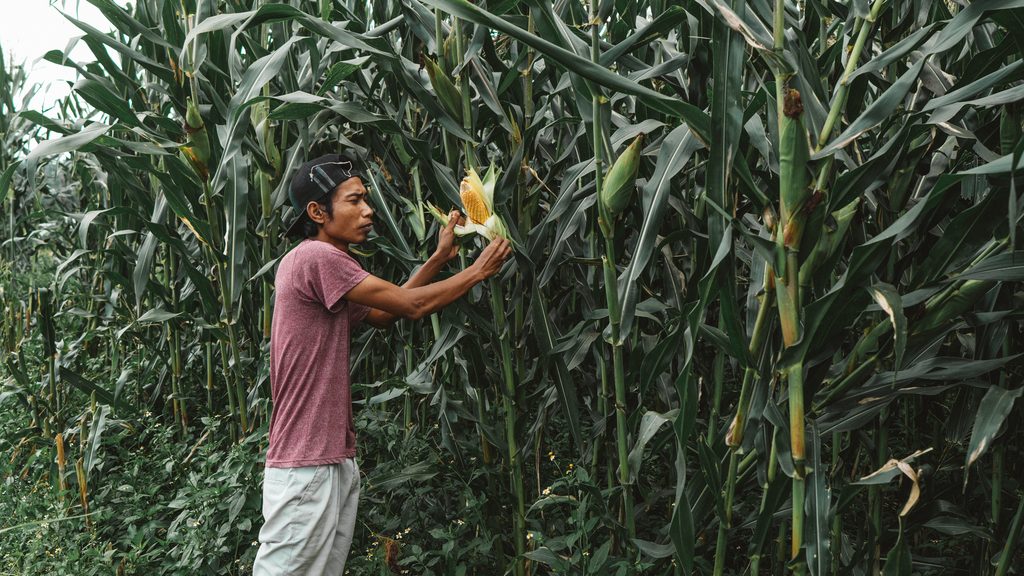
Farmer inspecting home-grown corn crops at Bodhi’s Farm, Bali
What Sustainable Farming Looks Like Day to Day
For her, sustainability isn’t a green logo or the word “organic” in marketing. It’s the everyday decisions about how to use what’s already at hand.
Bodhi’s Farm sits in a rural part of Bali, surrounded by other farms. That lets it work with the local farming community:
- Black Soldier Fly larvae: organic waste from the retreats and from neighbouring farmers is used to raise larvae, a natural protein source in the chicken feed.
- Home-grown crops: corn, kale, lettuce, mustard greens, mint and other plants support the farm’s activities.
- Probiotics and traditional herbs: part of the daily routine to keep the chickens healthy.
“That is the essence of sustainability: looking at what we already have, finding ways to use it responsibly, and creating value rather than simply throwing things away.”
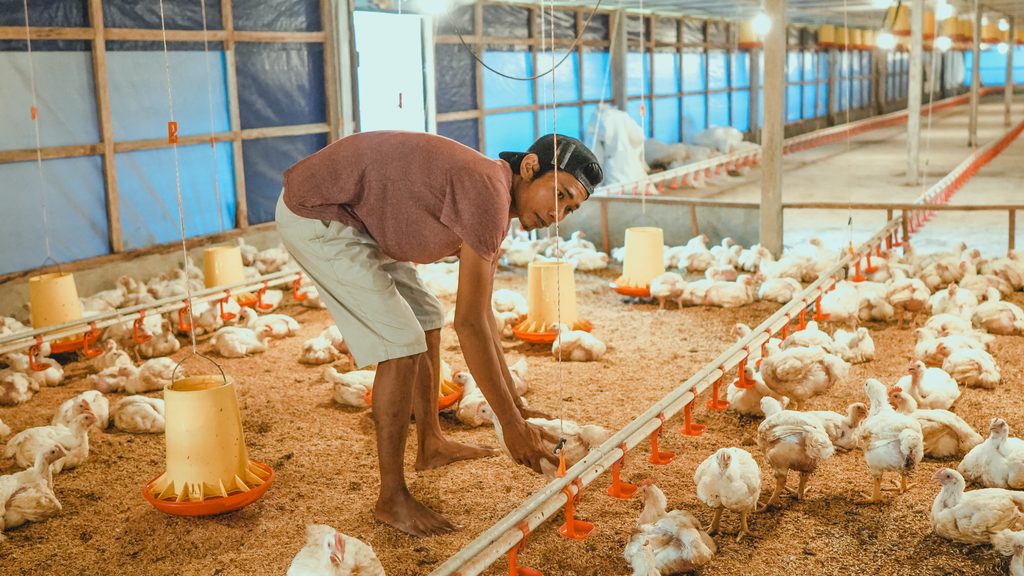
Farm team member caring for naturally raised chickens at Bodhi’s Farm, Bali
Born in the Pandemic: Running a Farm Alongside Retreats
Bodhi’s Farm began during COVID-19, with no big expectations. As health became everyone’s priority, she thought harder about the quality of food families eat. Just as important, tourism had practically stopped, and she wanted to keep her employees working.
“We didn’t know exactly where the farm would take us. We simply started with what we had, learned along the way and gradually developed our farming practices.”
Running a farm next to retreats is demanding. Retreats depend on bookings, service and guest experience, while animals need care every day, busy season or not. Add production costs, consistent quality and teaching customers why naturally raised chicken is different.
What keeps her going is the purpose behind it: protecting her team’s livelihoods, providing healthier food and creating something meaningful in a hard time.
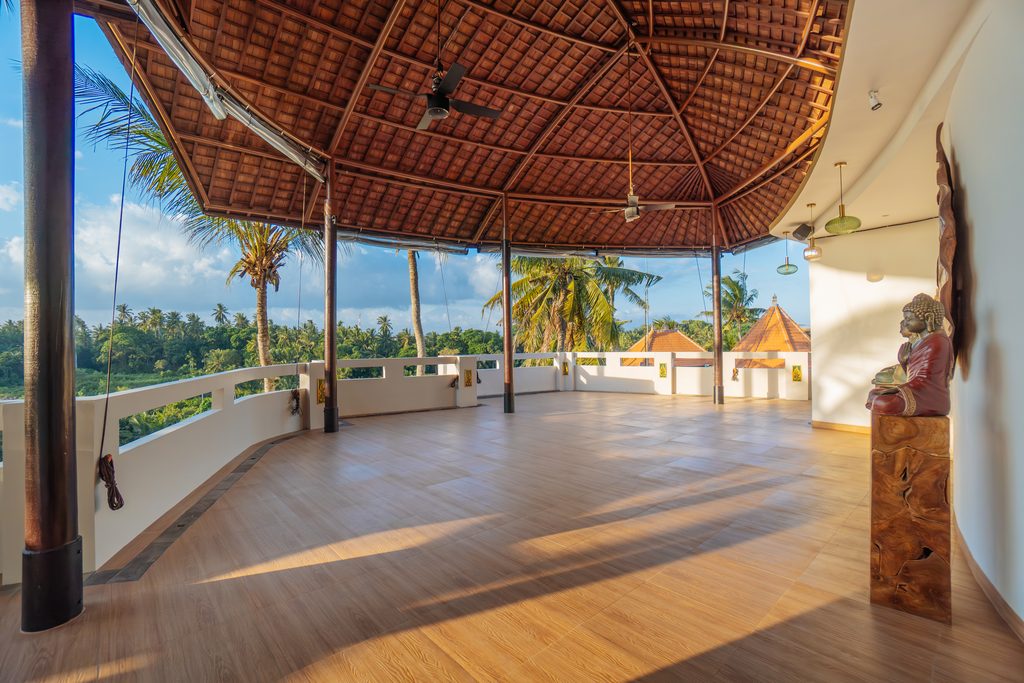
Open-air yoga shala overlooking tropical palms at The Bodhi Leaf Wellness, Bali
Looking Ahead: One Connected Ecosystem
Her plan is to grow all three businesses as one ecosystem, not as separate companies:
- The Bodhi Leaf Wellness will keep growing as an intimate sanctuary for individuals, couples and small groups seeking personal healing and emotional renewal.
- Floating Leaf Eco Retreat will keep welcoming retreat leaders from around the world for group experiences, cultural connection and transformational wellness.
- Bodhi’s Farm aims to reach more families, restaurants and businesses that want naturally raised, nutritious chicken.
She also hopes Bodhi’s Farm can become a model of circular farming for other hospitality businesses in Bali.
“Imagine hotels and retreats being able to look at their organic waste differently, not as something to simply dispose of, but as a resource that can support local agriculture and food production.”
For her, growth isn’t about more properties or more sales. It’s about building something that keeps giving back to people, communities and the planet.
Advice for Balinese Women Starting a Business
We asked what she’d tell a Balinese woman who wants to start a business rooted in her land and culture.
“Don’t underestimate what you already have.”
Bali has a rich culture, generations of traditional knowledge, remarkable natural resources and a strong sense of community. Because these are so familiar, it’s easy to forget how valuable they are. Her advice:
- Don’t copy what everyone else is doing. Build something tied to your values, your experience and the place you call home.
- Be creative, keep learning, and mix traditional knowledge with new ideas.
- Accept that not everything goes to plan. Floating Leaf was the original vision, The Bodhi Leaf grew from it, and Bodhi’s Farm came out of an unexpected crisis.
- Build a business you’re proud of, not only for what it earns but for what it gives back.
“I believe women in Bali have enormous potential to create businesses that are both commercially successful and deeply meaningful. We just need to believe in our ideas and have the courage to begin.”
Final Thoughts
The Bodhi Leaf Wellness shows what a wellness retreat in Bali can be when healing doesn’t stop at the treatment room door.
“True wellness reaches far beyond what occurs within our retreat spaces. It starts in the earth beneath us and flows through the food we share, how we treat our animals, and our daily actions.”
With Floating Leaf Eco Retreat and Bodhi’s Farm beside it, it’s one part of a circle that supports guests, local farmers and the island itself.
The Bali Leaf
Jl. Pantai Purnama No. 42, Sukawati, Kec. Sukawati, Kabupaten Gianyar Bali 80581
http://www.thebalileaf.com/